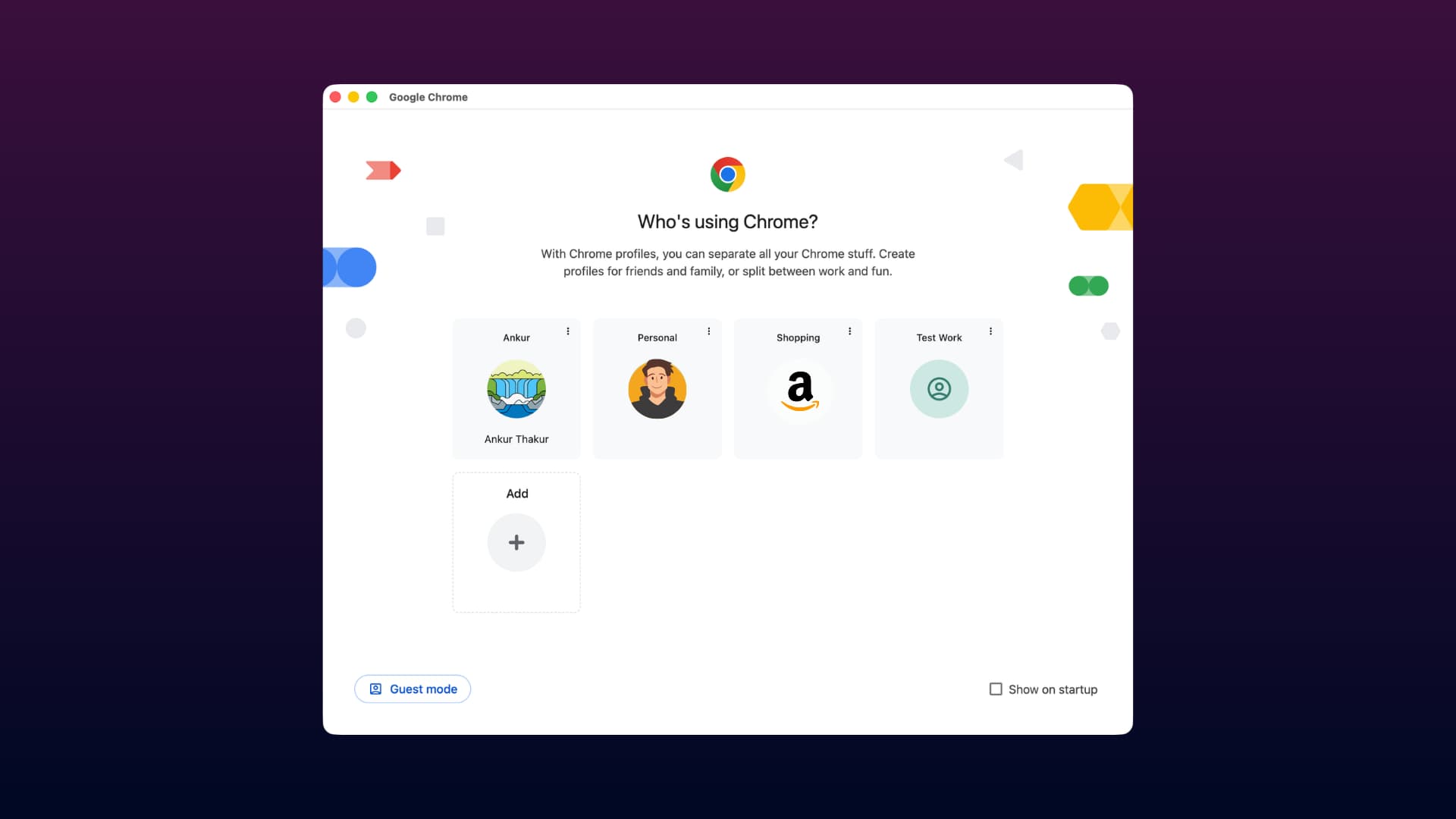
Learn how to add a second, third, or more profiles to Google Chrome on your Mac so you can keep your online accounts, browsing history, bookmarks, and everything else separate.
Why I Use Chrome Profiles
Chrome is my default web browser on my Mac, and I have created these profiles:
- iDB: I logged into my work email account and use this profile for all office tasks.
- Personal Work: Here, I am working on my main personal project.
- Shopping: I logged into Amazon and similar sites here. I also installed a few price tracking extensions here.
- Sensitive Work: I usually access my PayPal and online banking through Safari. However, some features, like the site for using my credit card points, do not work properly in Safari. In this case, I use this Chrome profile. I do not use any extensions here and clear all browser data after each use.
- Other Profiles: I have a few different profiles for remaining projects.
Having so many different profiles gives me flexibility:
- Being able to log into different Google, YouTube, WordPress, social media, and other online accounts.
- Having different quick website shortcuts on the browser's homepage.
- Seeing relevant bookmarks instead of everything. For example, bookmarks for image compression sites only appear in my work profile, not in my shopping profile.
- Applying separate themes/views to my browser.
- Using different extensions or not using any extensions at all.
- Customizing each profile for my different jobs and projects.
- Not hesitating to clear browser data. When loading issues affect one or a few websites, the only way to fix them is to clear the history and other browser data. A major disadvantage of this is that it logs you out of every account, making it hard to log back in. Having different profiles and only clearing the history of one does not affect the others.
- Saving passwords separately.
I have been using multiple profiles in Chrome for a few years. When Apple added this feature to Safari in macOS Sonoma, I created a few profiles there as well (my family, siblings, and spouse's email accounts logged into different Safari profiles).
Adding a New Profile to Google Chrome on Mac
1) Open Chrome on your Mac.
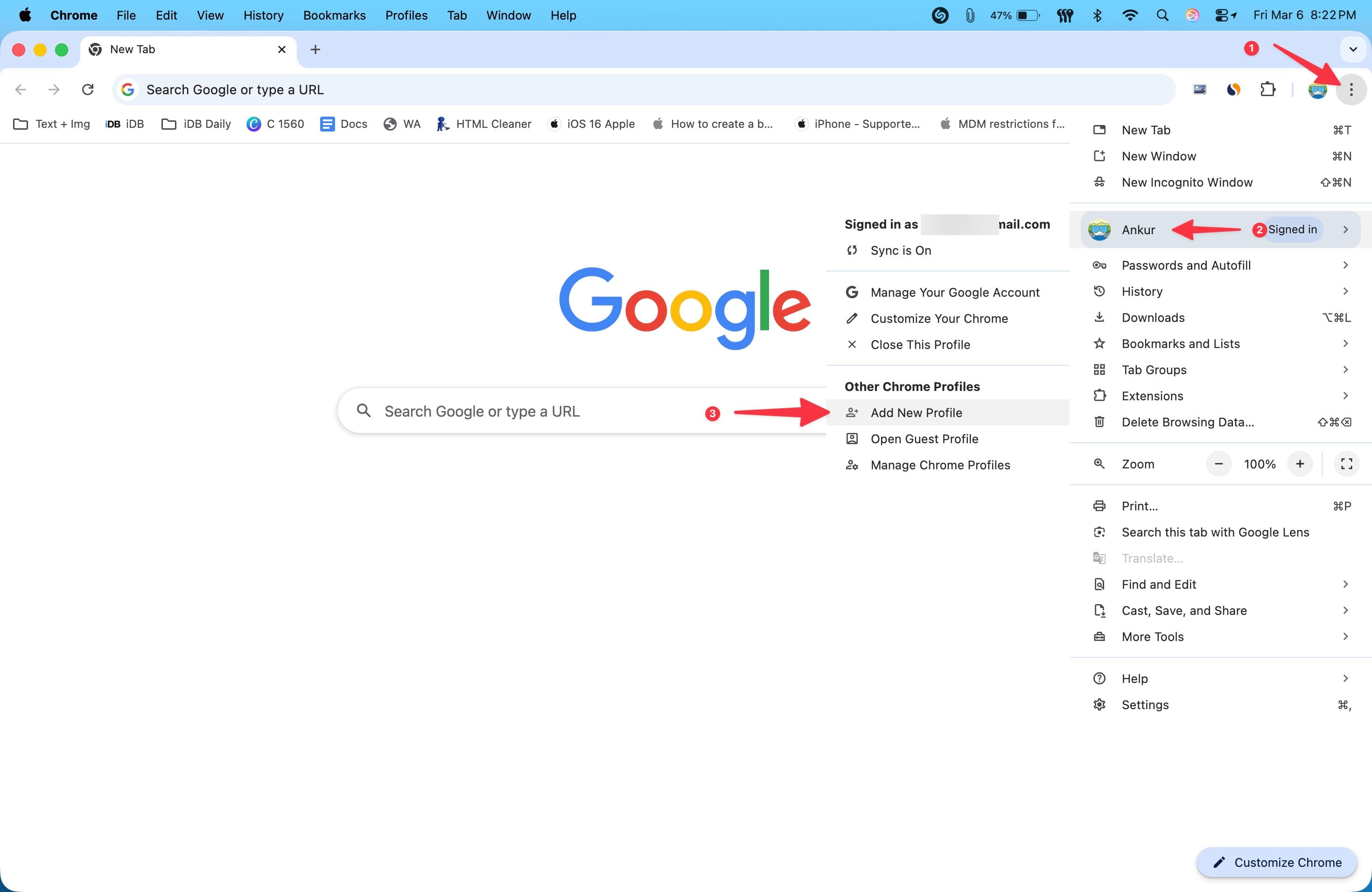
2) Click on Profiles > Add Profile from the top menu bar. Alternatively, click on the three dots menu button in the upper right corner, select your current profile name, and click on Add New Profile.
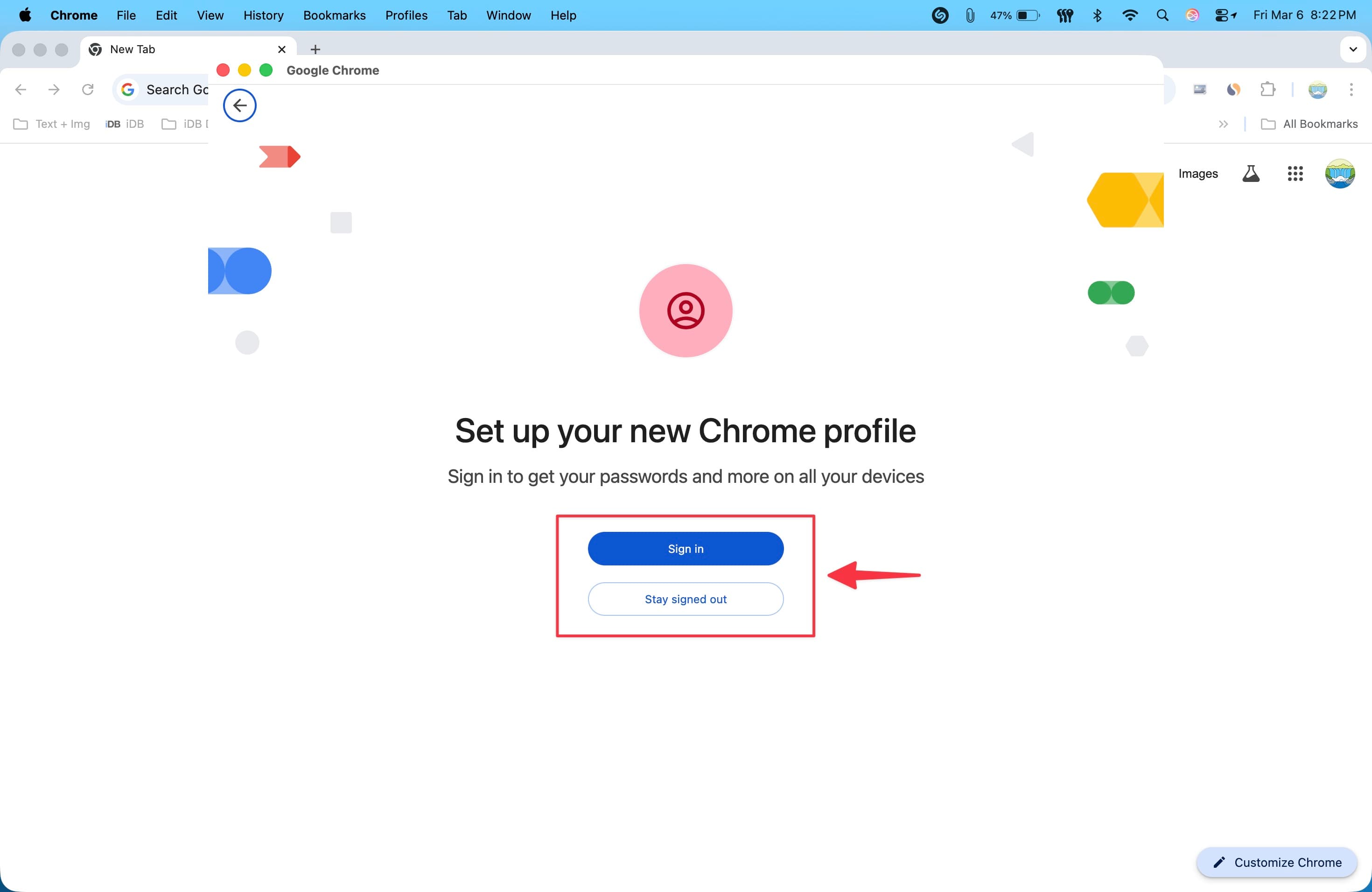
3) You can now set up your new Chrome Profile by signing in with your Google account. Or, if you do not want to use a Google account for this profile, click on the "Stay Signed Out" button.
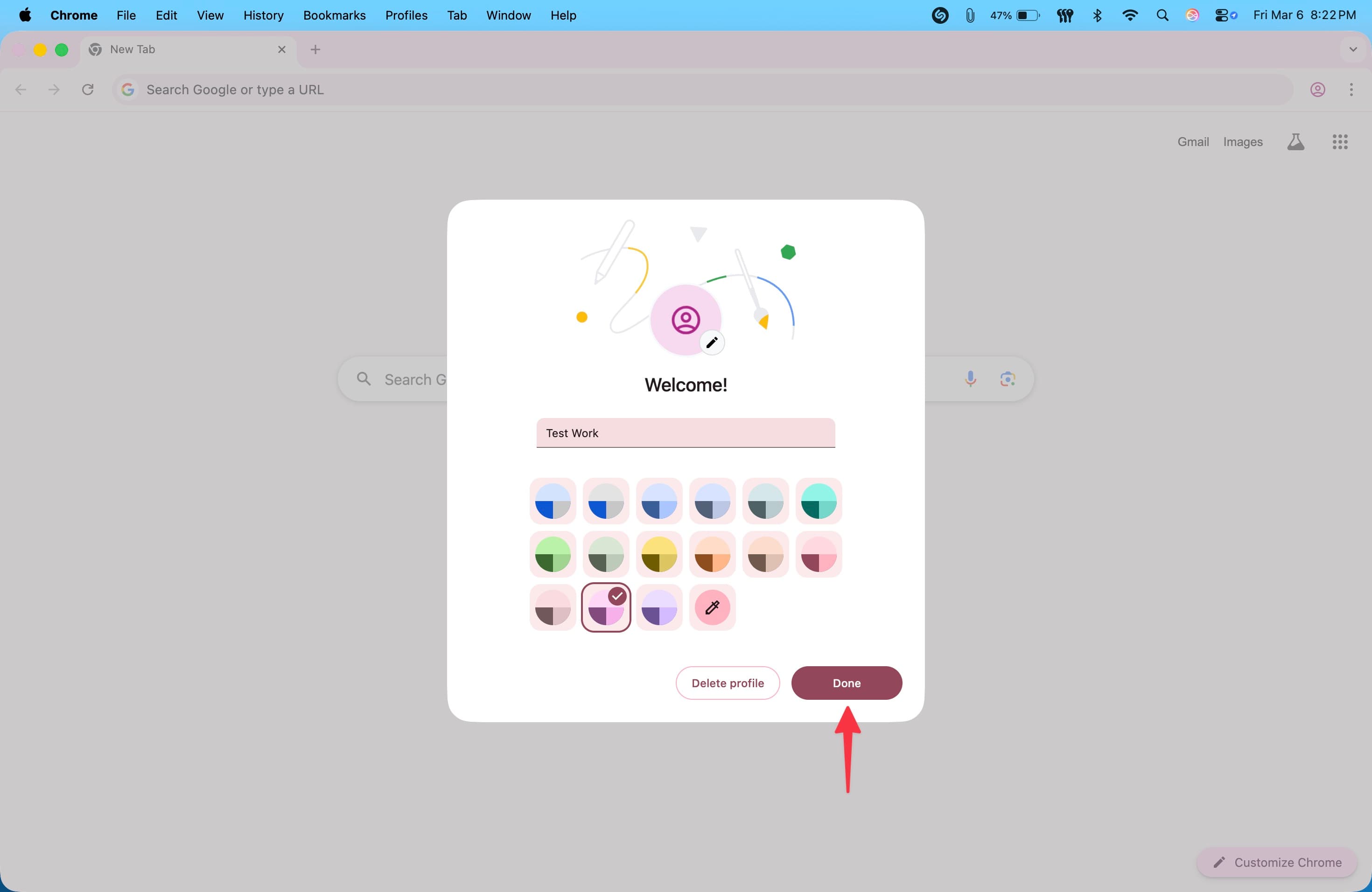
4) Now give this profile a name, choose a theme color, and click the Done button.
Repeat the steps above to add more profiles if necessary.
Switching Between Profiles
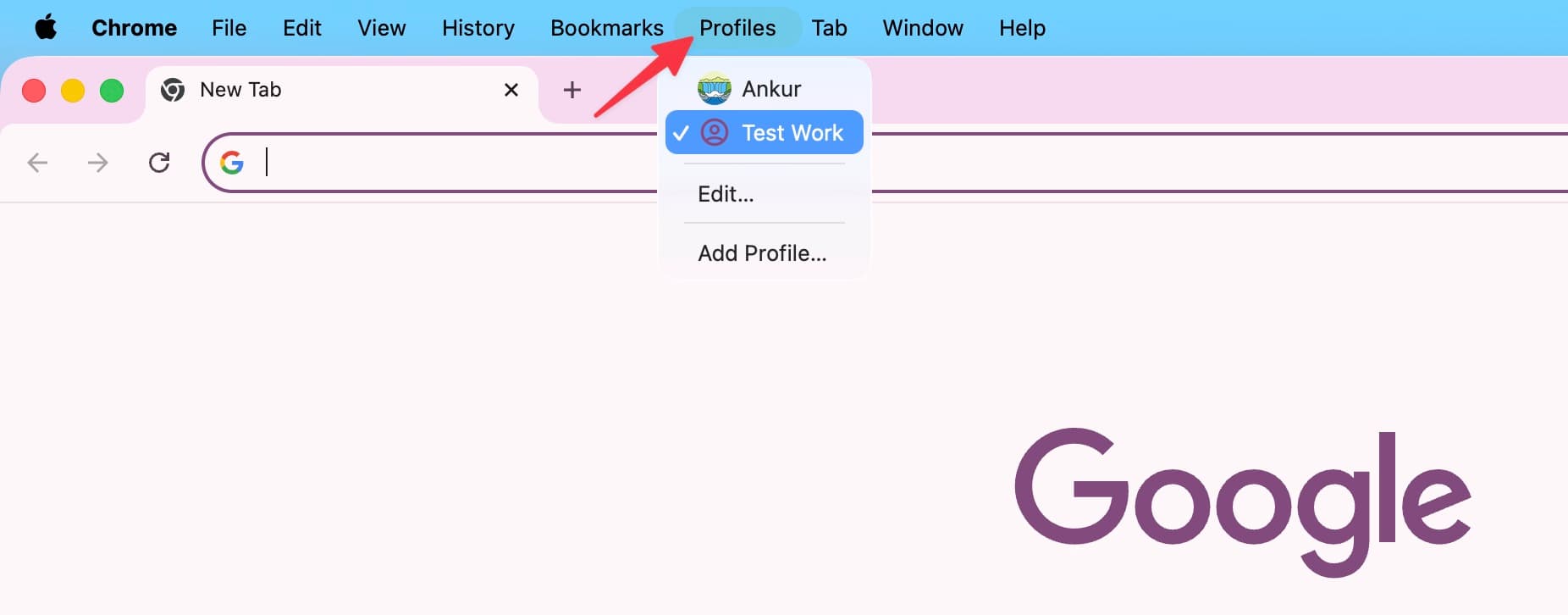
When you have at least two browser profiles, click on Profiles in the top menu bar and select the other one.
Show or Hide Profile Selector View When You Open Chrome
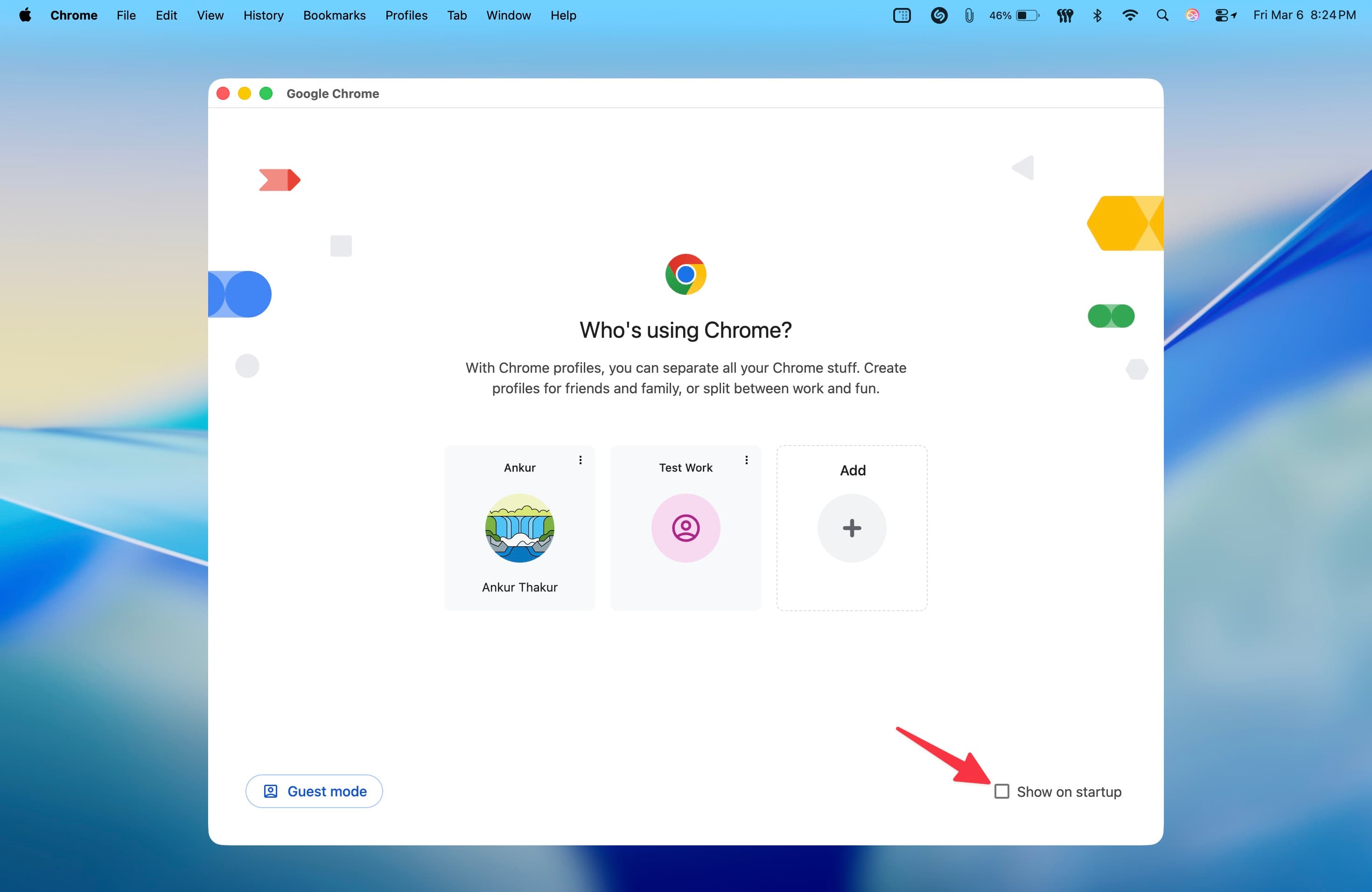
Chrome allows you to select a specific Chrome profile every time it opens.
Or, if this is an obstacle, you can hide the selector screen. Here are the steps for both actions:
- Open Google Chrome, and if the selector is visible, uncheck the "Show on Startup" option.
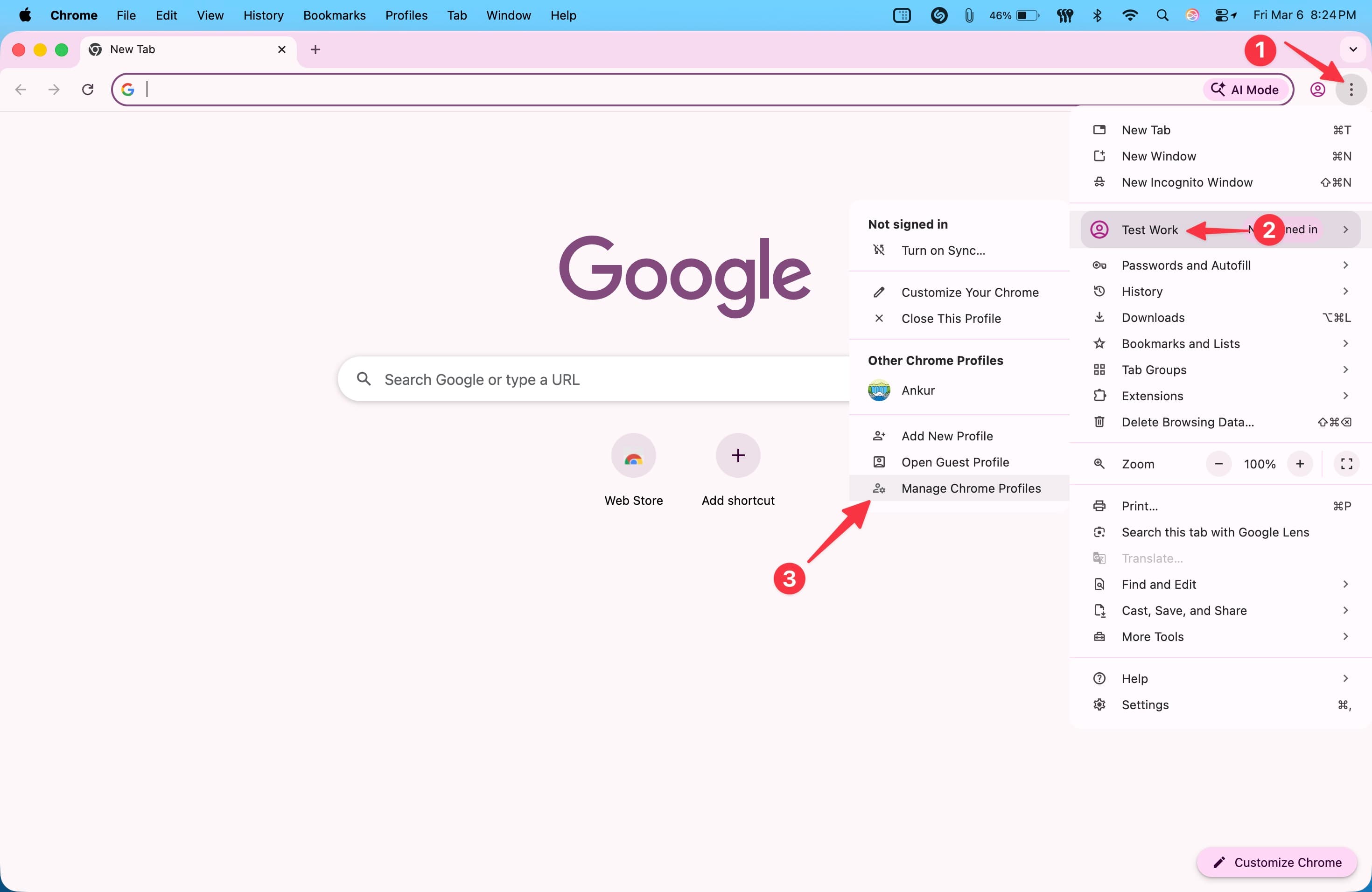
- If the browser is already open, click on the three dots menu button in the upper right, select your current profile name, and then click on Manage Chrome Profiles. Then, check or uncheck the "Show on Startup" option.
Using Different Profiles Simultaneously
You can open multiple Google Chrome profiles in separate browser windows and use them simultaneously. However, keep in mind that some features of Chrome, like Split Screen, only work when two websites are open in the same profile.
Customizing Your Profile
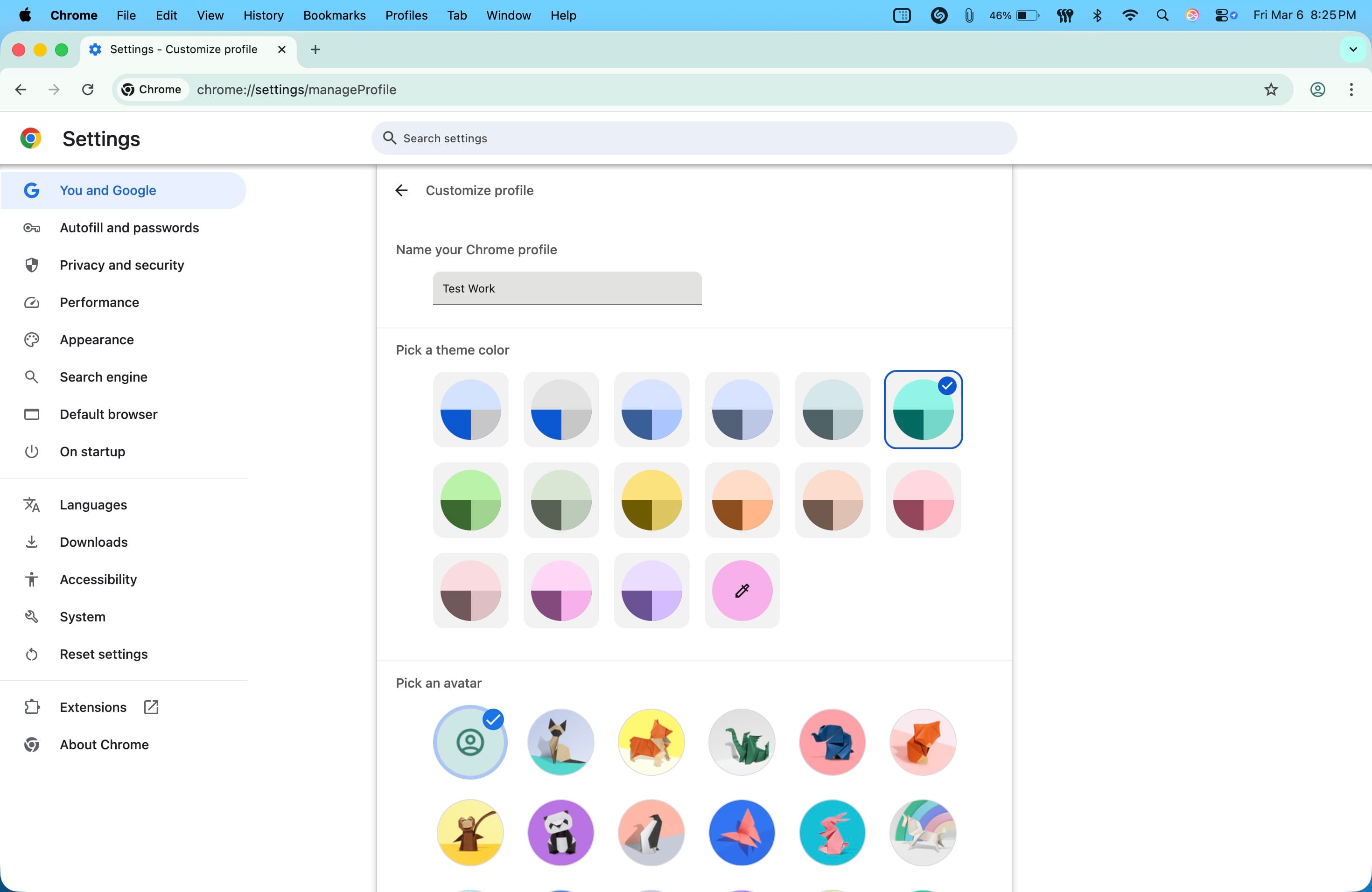
Open Chrome and make sure you are in the profile you want to customize. Then, click on Profiles > Edit from the top menu bar to change the name, theme color, and avatar.
Deleting a Profile
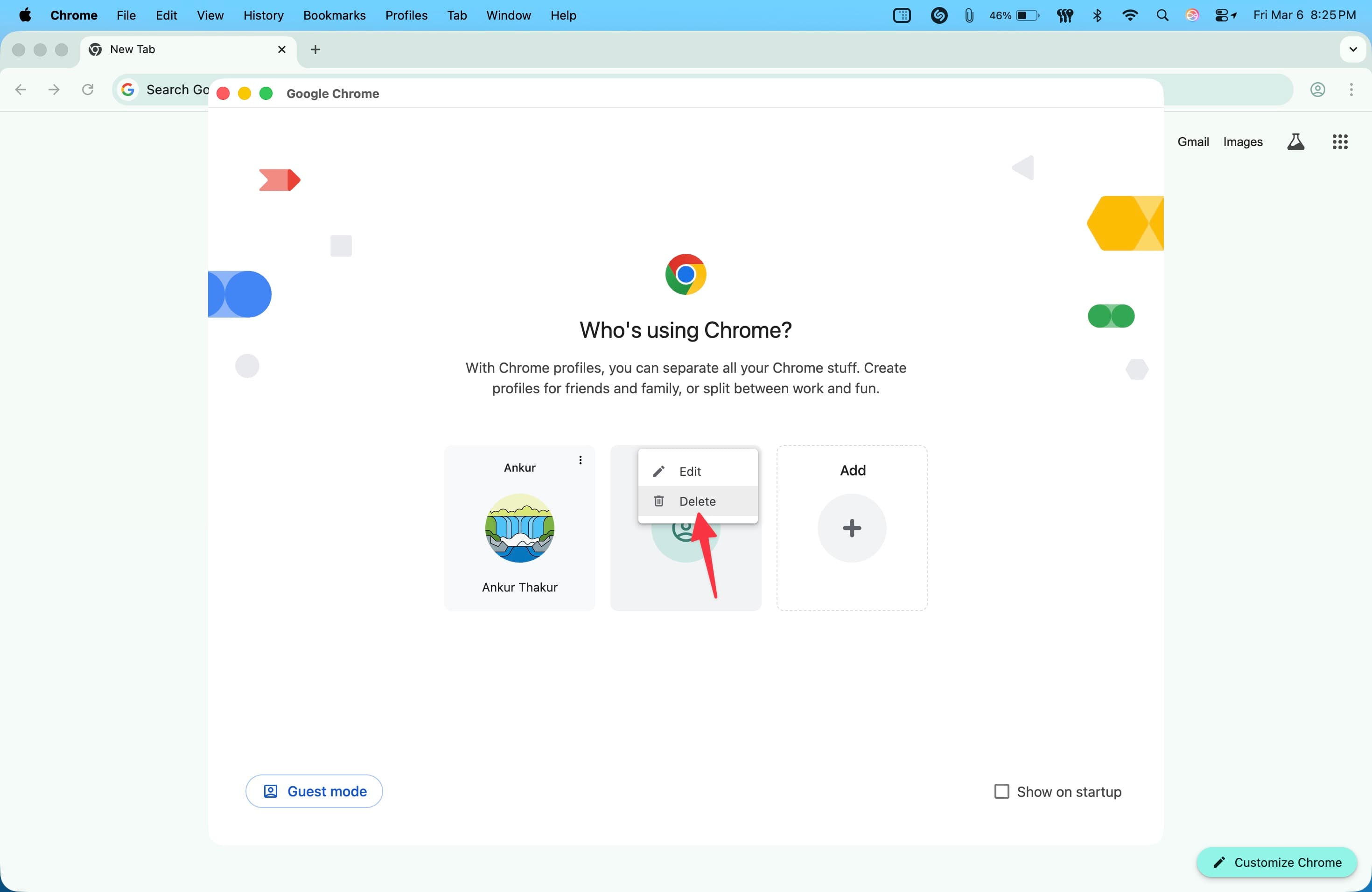
If you no longer need a profile, open the profile selector screen (three dots menu > profile > Manage Chrome Profiles). Click on the three dots icon of the profile you want to delete, then select Delete.
Using Guest Profile in Google Chrome
The guest profile in Chrome is essentially similar to the guest account mode in macOS.
Things you visit in Chrome's guest profile are not saved to your browsing history. When you exit guest mode, cookies and traces of other local browser data on your computer are removed. However, unlike macOS Guest mode, files you download in Chrome Guest mode are not automatically deleted and are saved in your Mac's Finder (or your Windows PC's File Explorer).
To enable the guest profile in Chrome, click on the three dots menu icon, hover over your current profile name, and select Open Guest Profile.




Comments
(5 Comments)