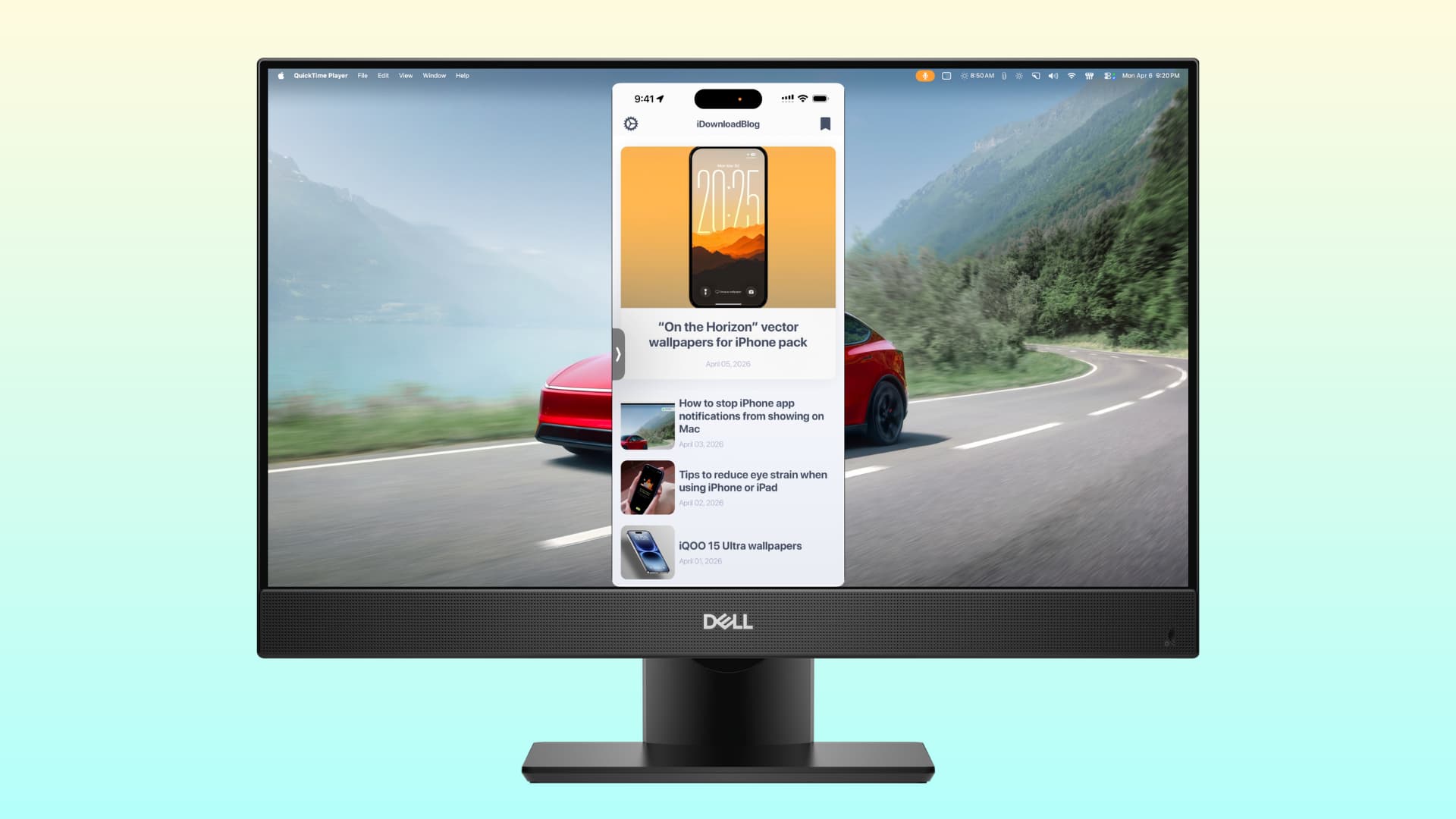
In this quick guide, we explain various ways to mirror your iPhone or iPad screen to a computer monitor or TV, so you can see everything on a larger display.
Note: You can control your iPhone or iPad by connecting a keyboard and mouse/trackpad while mirroring the screen to a larger display.
Mirroring with AirPlay
If you have a TV (like this LG TV) or monitor (like this Samsung monitor) with built-in AirPlay support, follow these simple steps to mirror your iPhone or iPad screen to it.
1) Turn on your monitor or TV. If such a setting is available, go to the AirPlay settings. You may need to download a third-party app to use AirPlay on some Android TVs.
2) Make sure Bluetooth and Wi-Fi are enabled on your iPhone or iPad. Then, open the iOS Control Center and tap the Screen Mirroring icon. Wait for your monitor or TV to appear here, then tap on it.
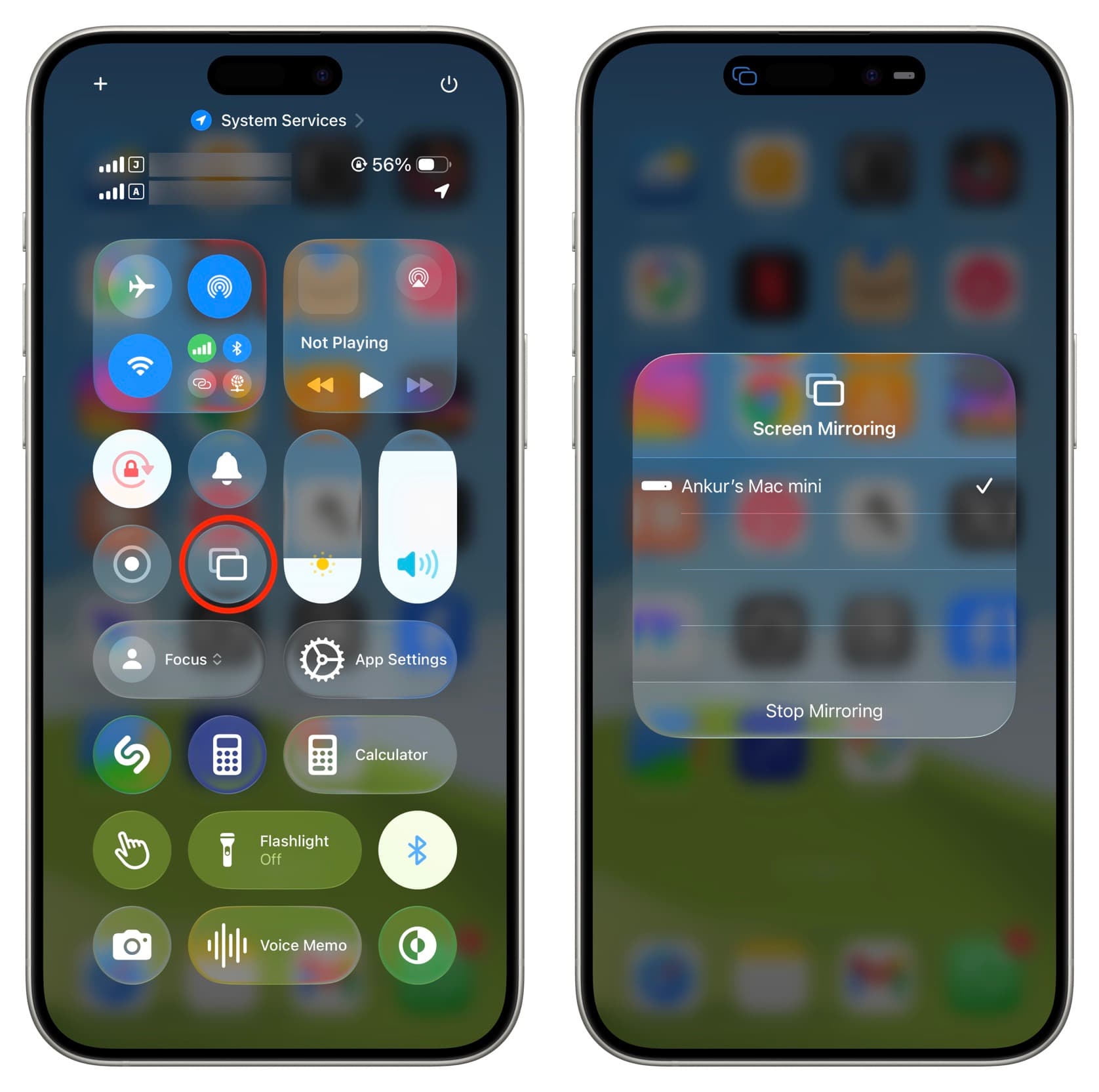
3) You should now see your iPhone or iPad screen on the larger display. If you see a connection request on the monitor or TV, make sure to accept it.
Connecting with Apple TV
If your TV does not support AirPlay but you have an Apple TV connected via HDMI, you can still use AirPlay. This is a repeat of the above steps, but instead of the monitor or TV, you will select your Apple TV after tapping the screen mirroring icon in the iOS Control Center.
Mirroring from Specific Apps
Many video apps, such as YouTube, Netflix, and Prime Video, have a Mirroring/AirPlay icon on the player. In most cases, this is an extension of the screen mirroring icon in the iOS Control Center and makes it easy to view your video on a larger screen. Just tap on it and select your AirPlay-supported display.
Direct Connection with Cable
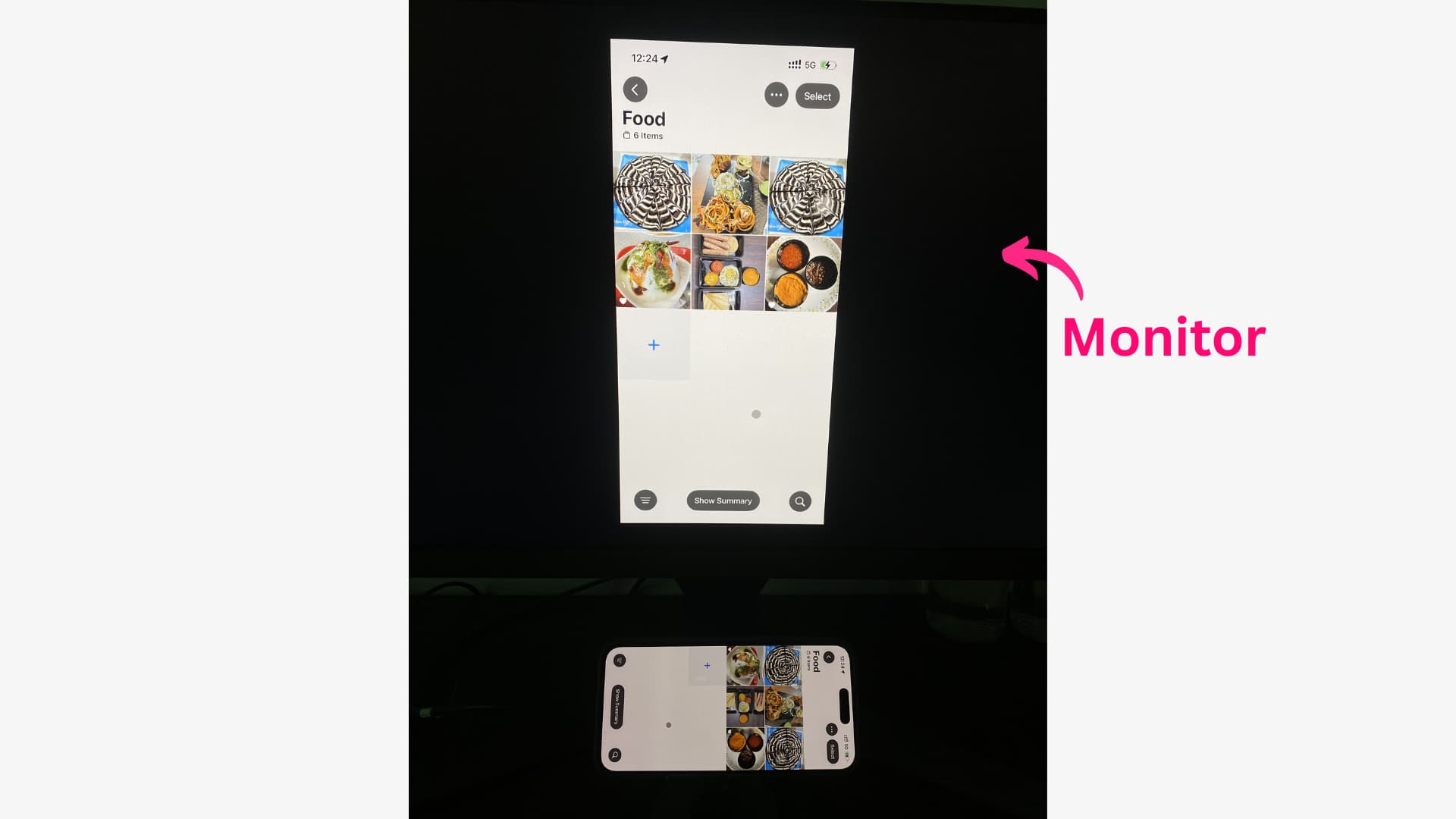
This wired method, while not as convenient as the wireless methods above, is the most reliable method with almost no latency. Connect your monitor or TV to the unlocked USB-C or Lightning port of your iPhone/iPad, and it should work immediately.
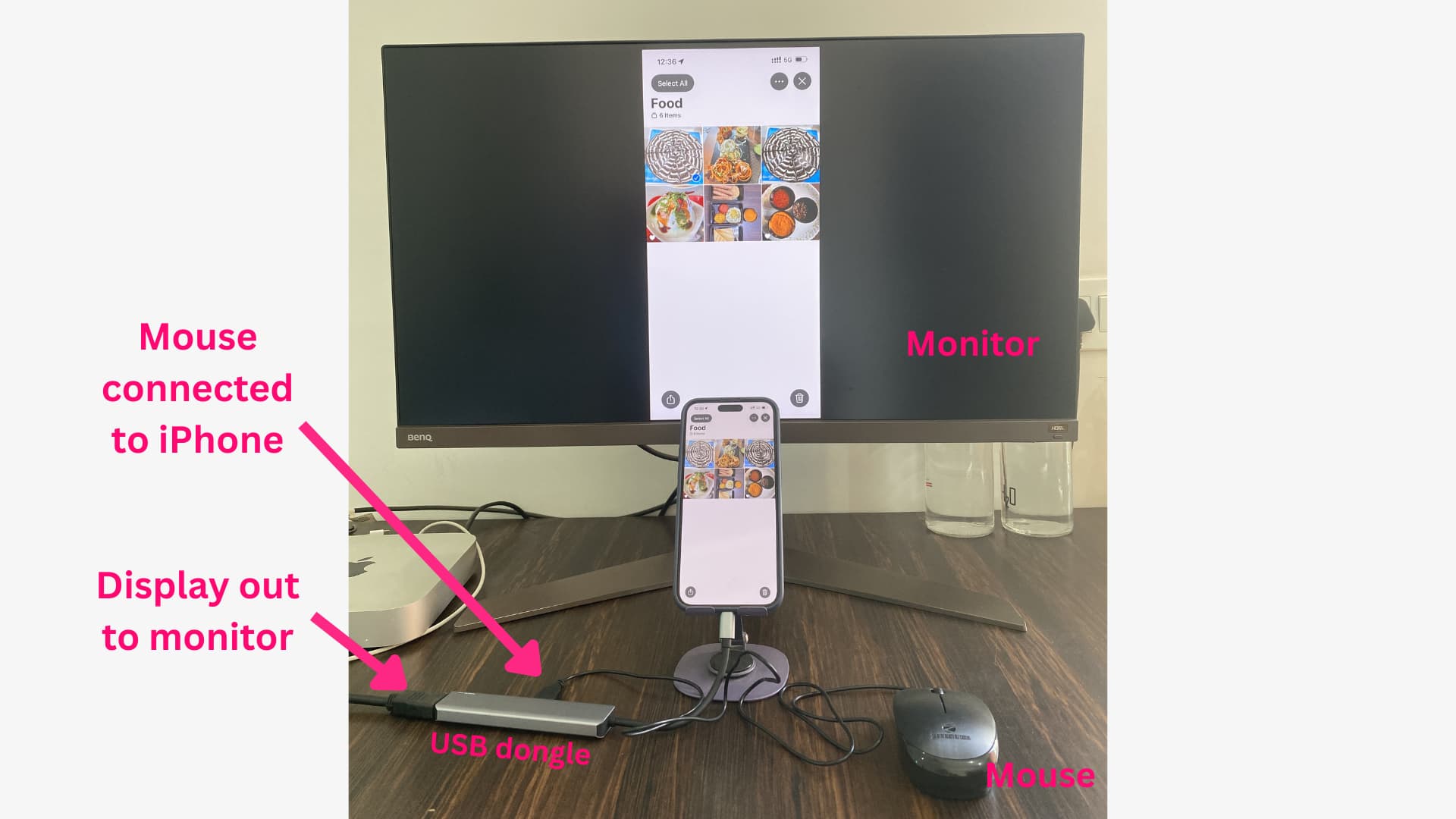
If your TV or monitor has a USB-C input, a single cable is sufficient; this is enough to connect the iPhone 15 or newer and all recent iPads.
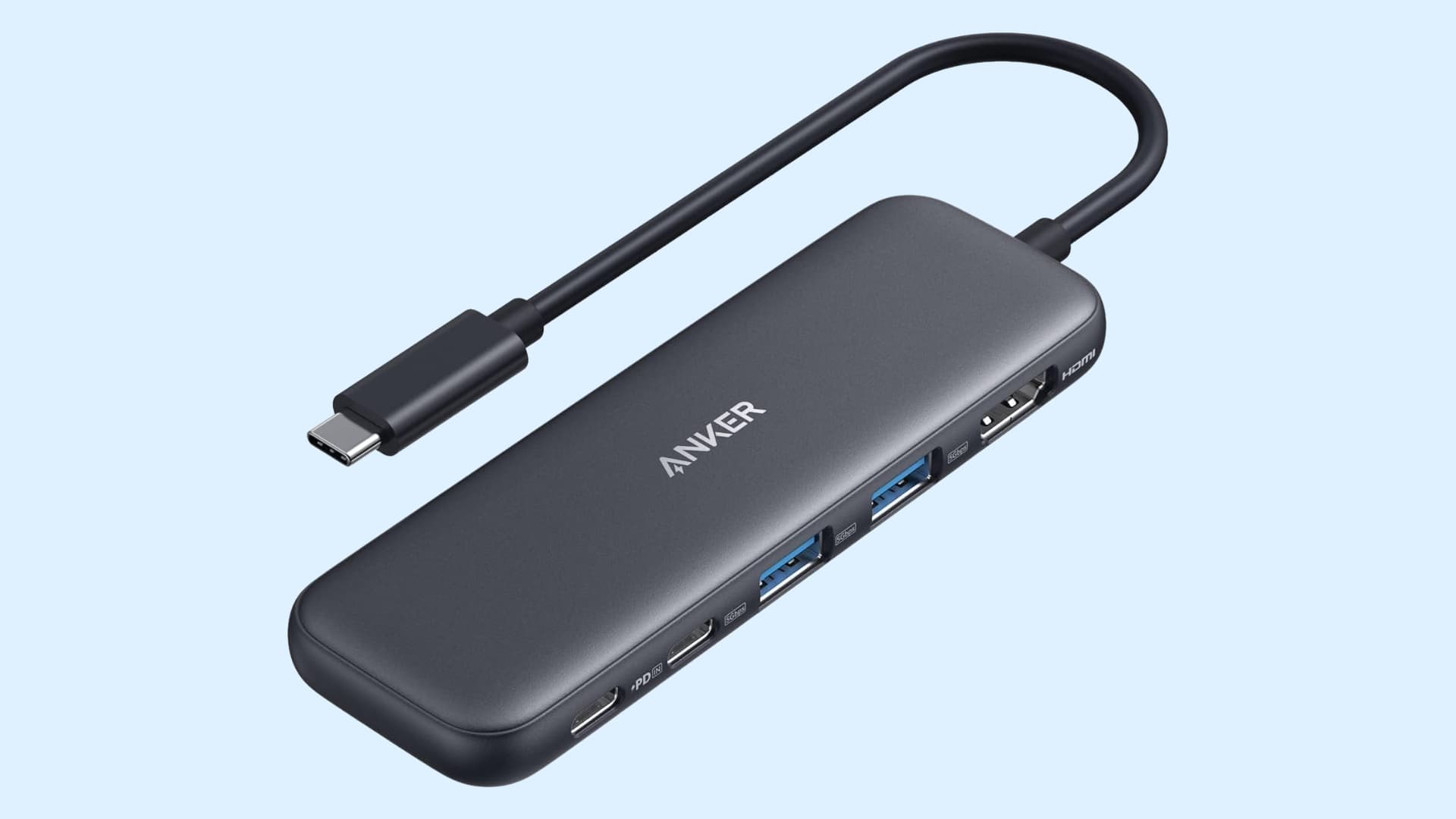
If your monitor or TV only has an HDMI input, you will need a USB-C dongle/adapter (this one from Anker) to connect.
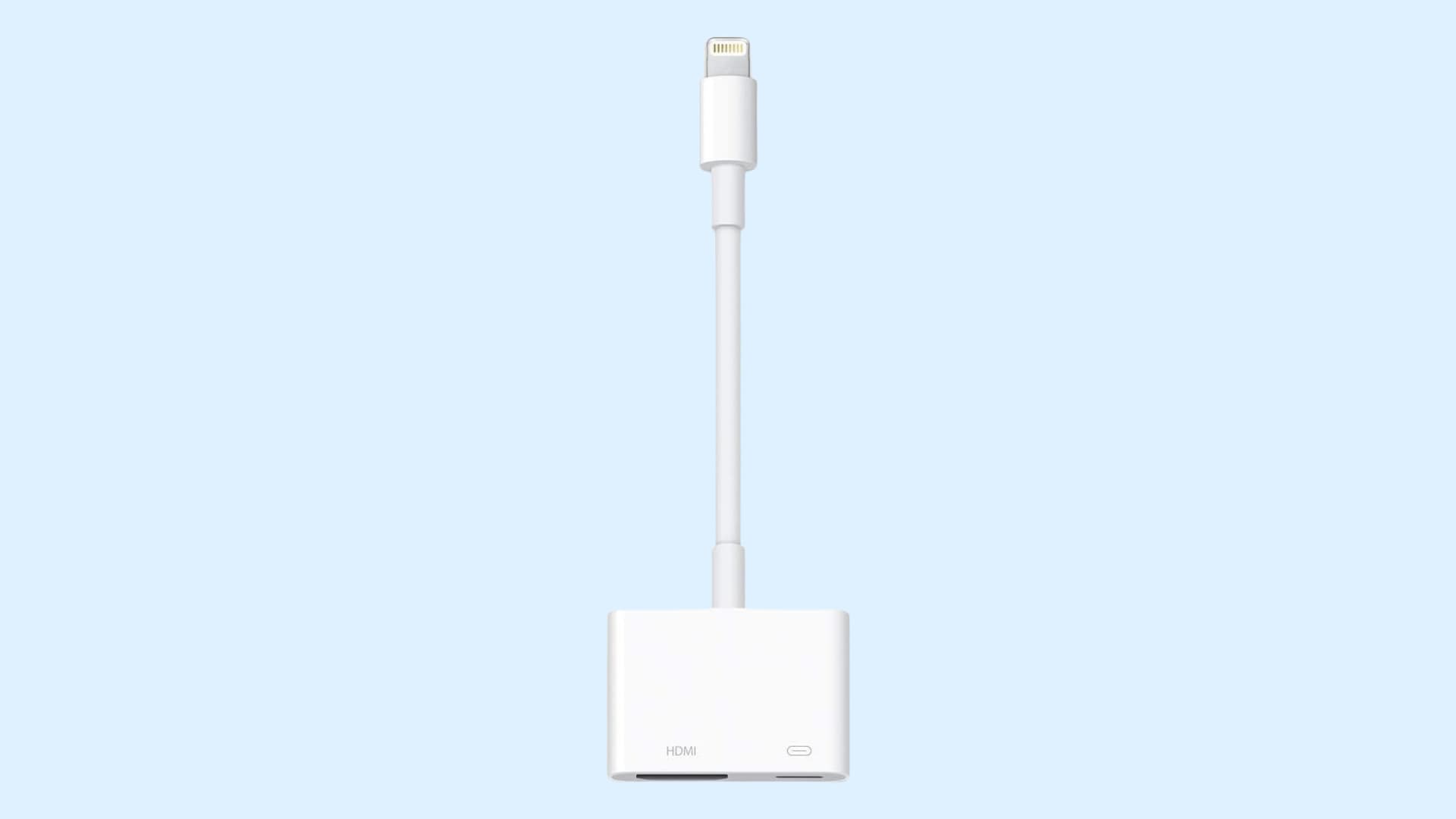
A Lightning to HDMI adapter (this one from Apple) will be required for iPhones and iPads with a Lightning port.
If Your Monitor is Connected to a Mac
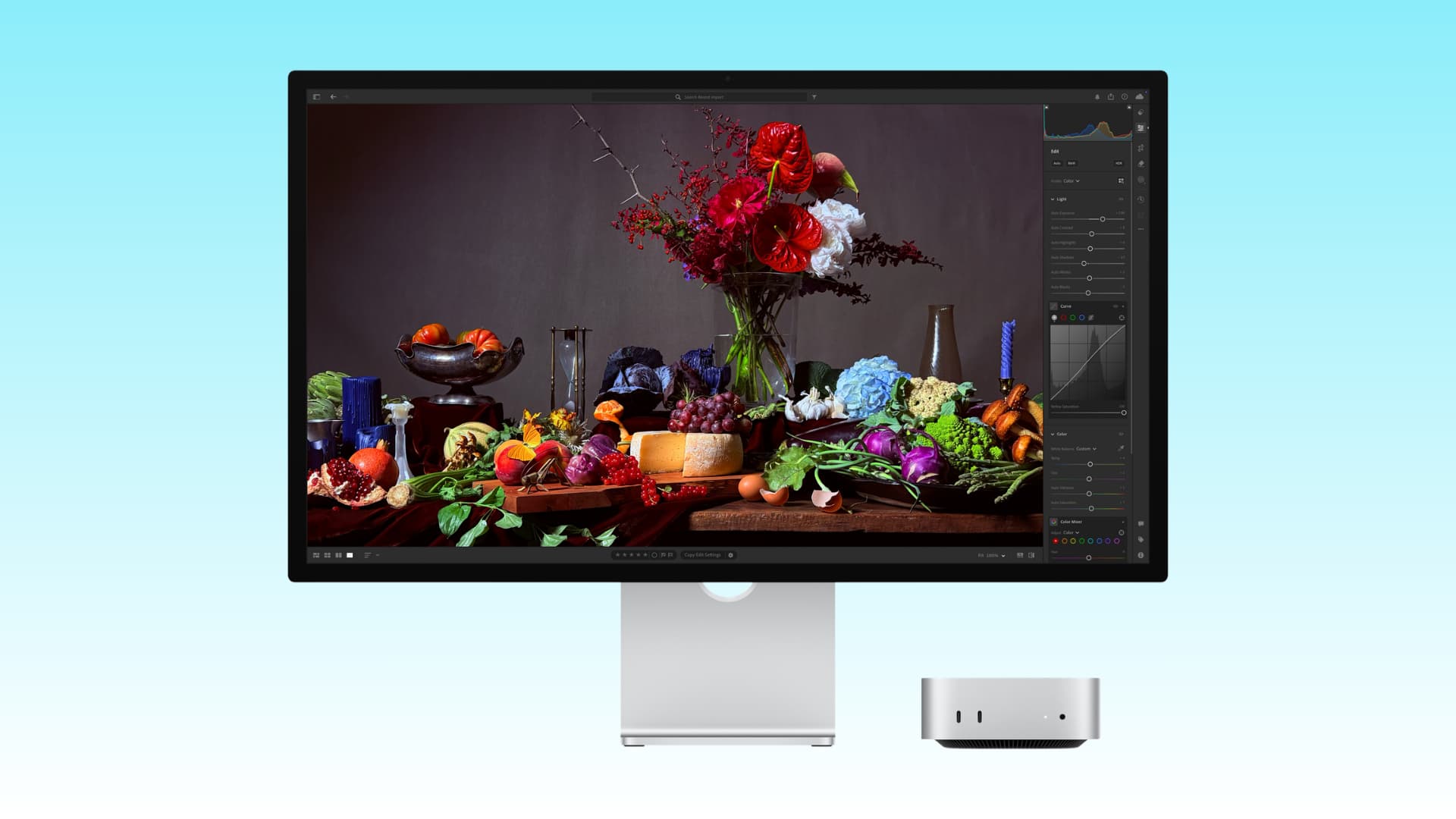
If your external display (like this Apple Studio Display) is already connected to a Mac and you don't have an available input port, you have three options to mirror your iPhone or iPad to it.
iPhone Mirroring
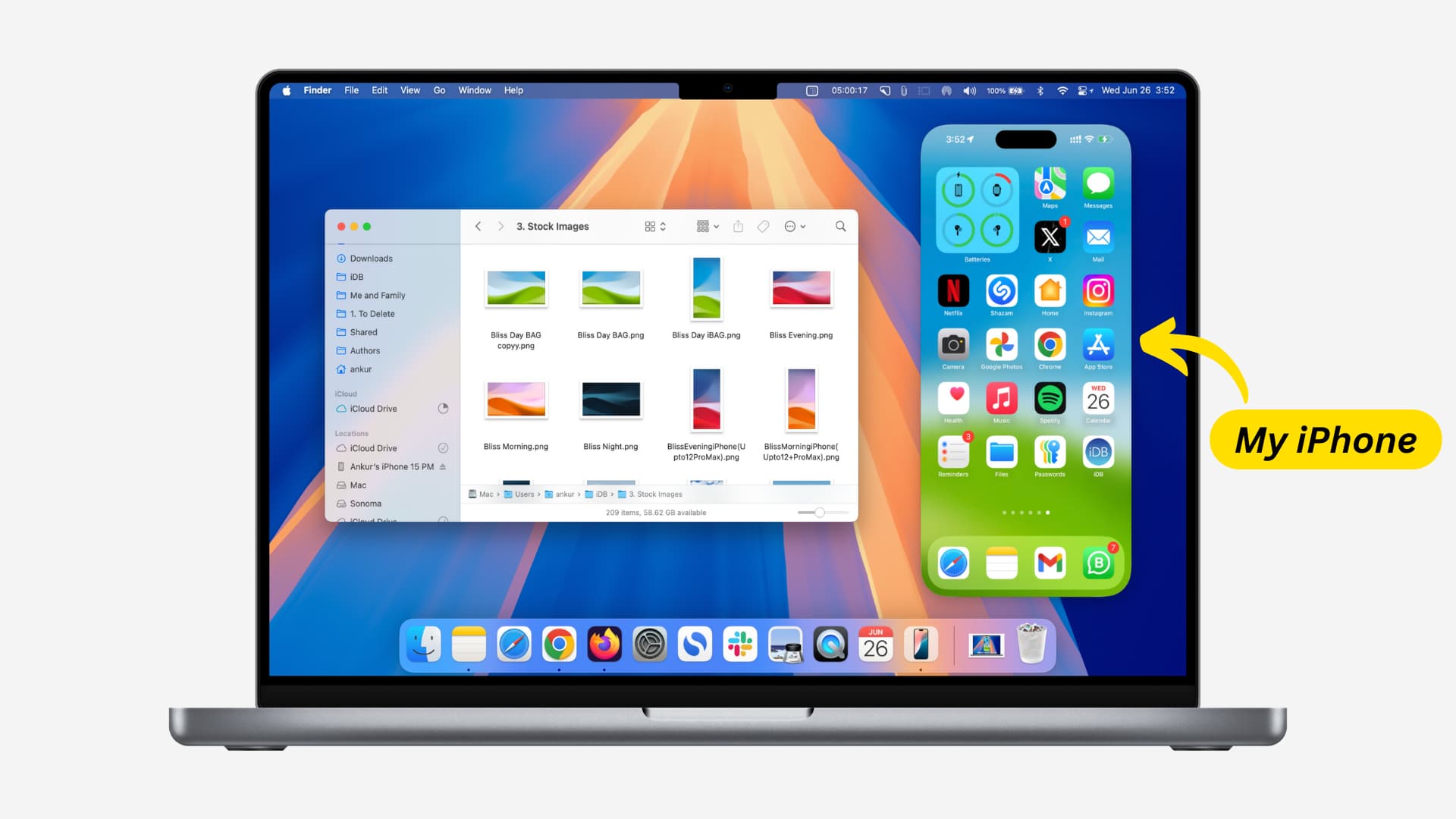
Using the iPhone Mirroring feature, you can see and control your iPhone (not iPad) from your Mac. By default, the window is medium-sized. However, you can make it larger by clicking View > Make Larger or by pressing Command + Plus (+) keys. iPhone Mirroring works wirelessly when Wi-Fi and Bluetooth are enabled.
Mirroring with QuickTime Player
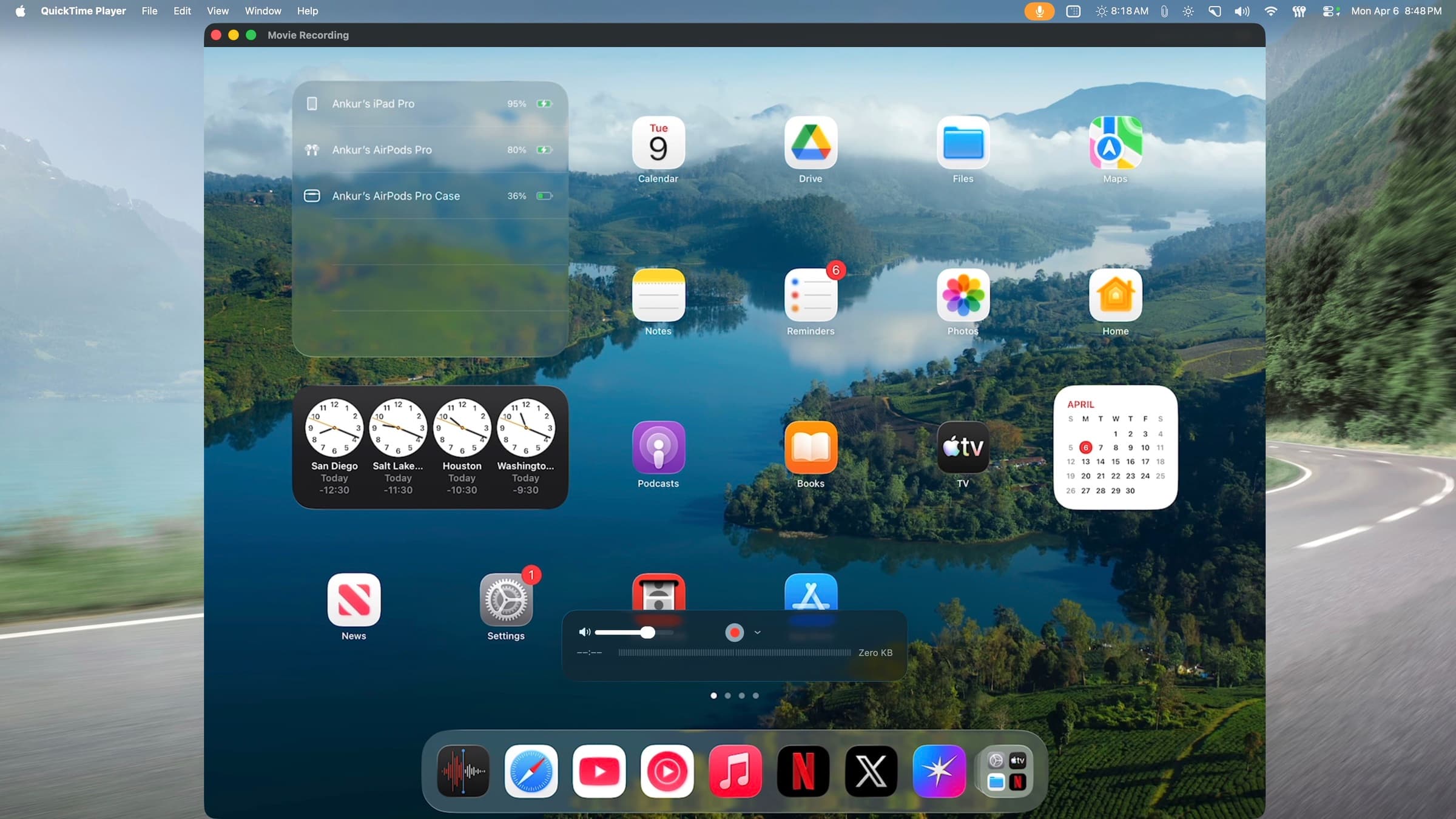
Connect your iPhone or iPad to your Mac using a USB-C or Lightning cable. Then, open Apple's built-in QuickTime application on your Mac and click File > New Movie Recording from the top menu bar. Now, click on the small arrow icon in the QuickTime window and select your iPhone or iPad as the camera. You can also record the screen now.
Mirroring with AirPlay
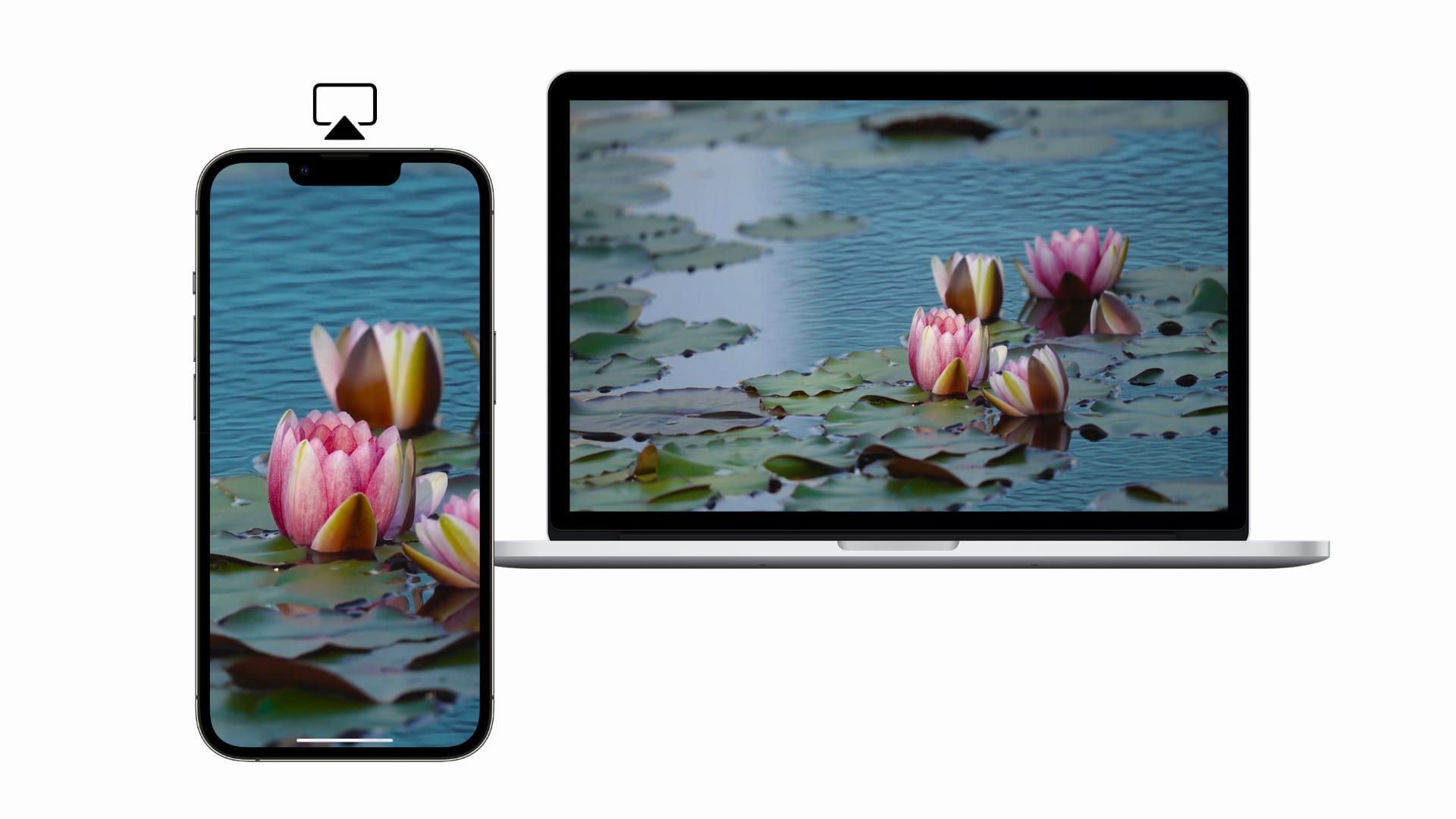
Finally, your Mac can also function as an AirPlay receiver (this feature is enabled by default). Just tap the Screen Mirroring icon in the iOS Control Center and select your Mac to mirror your iPhone or iPad screen to it. You cannot use your Mac for anything else unless you terminate the AirPlay video session.


Comments
(8 Comments)